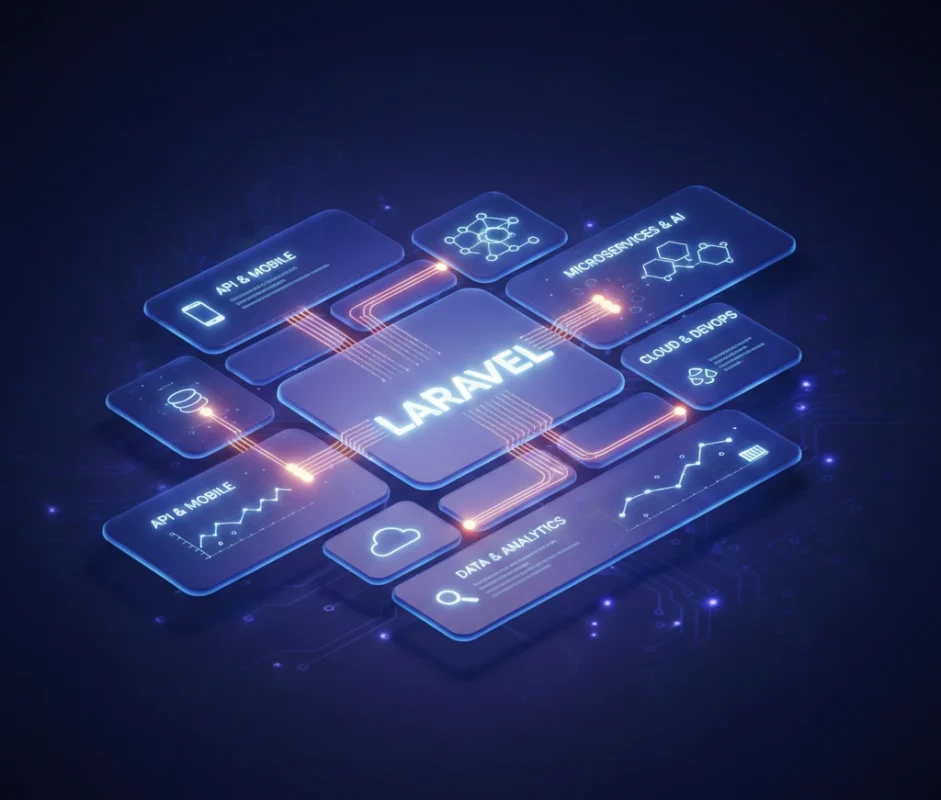
We use modern Laravel ecosystem tooling to keep products fast, scalable, and comfortable to maintain:
- High-Speed Engines: Laravel Octane and Swoole for sub-second response times.
- Frontend options: Livewire, Inertia, or React depending on the product UI and team workflow.
- Cloud readiness: AWS-based deployment patterns, Vapor where it’s a good fit for serverless scaling.
Frequently Asked Questions about Laravel Development
What types of products do you build with Laravel?
We build Laravel web applications and APIs: SaaS platforms, internal tools, dashboards, customer portals, and integration-heavy systems. We focus on maintainability, predictable delivery, and performance under real traffic.
Can you take over an existing Laravel project?
Yes. We begin with a quick audit. This includes checking architecture, dependencies, code quality, security risks, and performance issues. Then, we suggest a stabilization plan and a delivery roadmap for upgrades and new features.
Do you help with Laravel upgrades and migrations?
Yes. We plan upgrades as a controlled migration: dependency review, upgrade path, staging rollout, regression testing, and monitoring. The goal is to reduce downtime risk and avoid costly rewrites.
How do you estimate timeline and cost?
We recommend a short discovery phase to define scope, risks, and architecture. Then we provide a milestone-based plan with an estimate range and clear assumptions. This is the fastest way to get a reliable budget.
Do you build real-time features (notifications, live dashboards, chat)?
Yes. Laravel has built-in tools for real-time WebSocket communication called Laravel Reverb. It also works well with event broadcasting.
Can Laravel projects be SEO-friendly?
Yes. We view technical SEO as part of engineering. This includes performance (Core Web Vitals), clear information structure, and using schema when needed. We also focus on a reliable rendering strategy, like SSR when it is useful.
How do you ensure performance and scalability?
We combine application practices (caching, queues, indexing, query optimization) with infrastructure readiness (monitoring, load testing, and scaling patterns). We optimize for stable releases and predictable performance.
Is Laravel secure?
Security depends on implementation. We use secure defaults and best practices. This includes proper authentication and access control. We also focus on input validation, CSRF protection, and keeping dependencies clean. Regular updates are part of our routine.
What’s new in modern Laravel that matters for businesses?
Laravel 12 builds on the improvements from Laravel 11. It also introduces new starter kits for React, Vue, and Livewire. There is an optional WorkOS AuthKit variant that includes social auth, passkeys, and SSO support.
Do you provide ongoing support after launch?
Yes. We can help with ongoing releases, bug fixes, performance improvements, and security updates. This can be done as a monthly retainer or a planned roadmap.