+32% Faster Shopify Store Built for a NYC Dog Apparel Brand
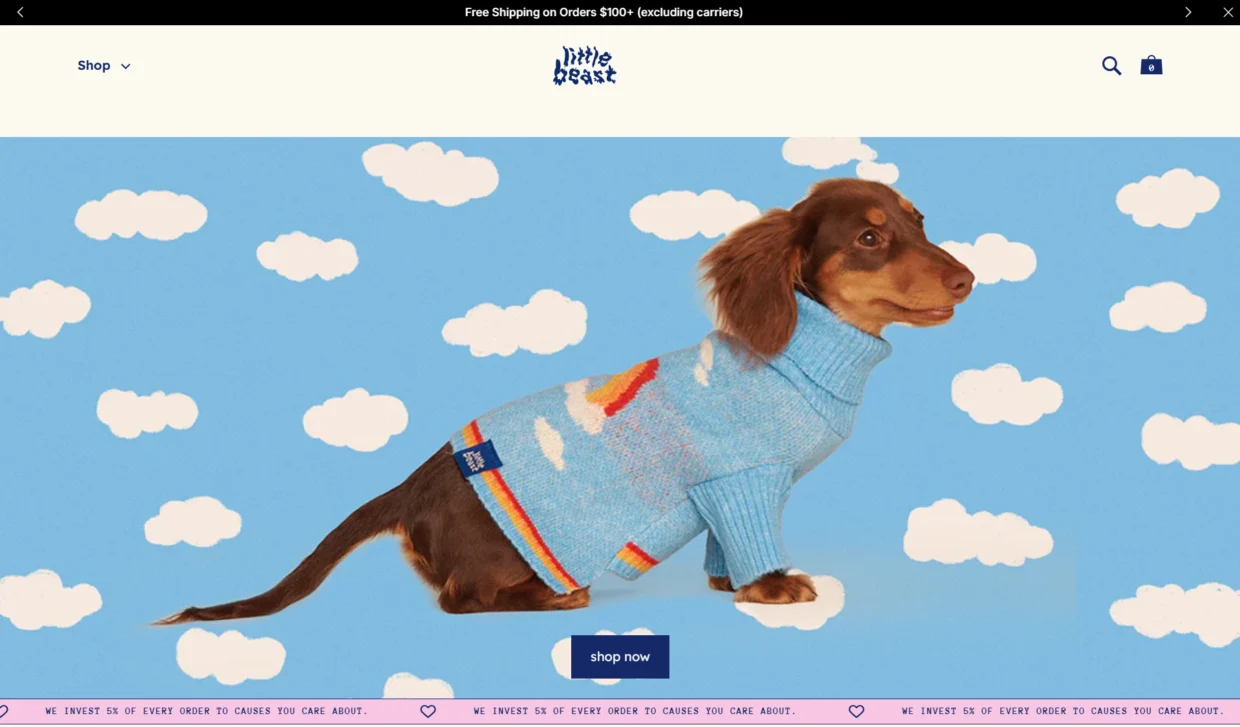
Little Beast is a high-end brand of dog clothing and accessories located in New York City. They offer designer pet apparel directly to consumers via a specialized Shopify store. Started by dog owners tired of dull, low-grade pet products, the brand is now well known in pet fashion. They teamed up with Peanuts, Disney, and Sandy Liang. Their mission includes donating 5% of each purchase to causes their customers care about.
The engagement began with a pixel-perfect Shopify theme built from Figma. It then grew into a 4+ year development partnership. We delivered 47+ features during that time. This included Rebuy Smart Cart customization. It also included SEO-optimized color swatches.We also improved Shopify page speed. Every update had one goal. It was to make this pet apparel Shopify store feel like a fashion destination. It should not feel like a generic pet supply shop.








Client / Industry: Little Beast – premium dog apparel & accessories brand (New York City, DTC)
Scope:
Tech Stack: Shopify – Liquid – JavaScript – CSS – Figma – Rebuy Engine – Klaviyo – Recharge
Little Beast had the brand identity and the product line. What they didn’t have was a digital storefront that matched the quality of their dog apparel. As a dog clothing brand in NYC, we faced tough competition from big pet stores and fast fashion. Every detail in user experience was important.
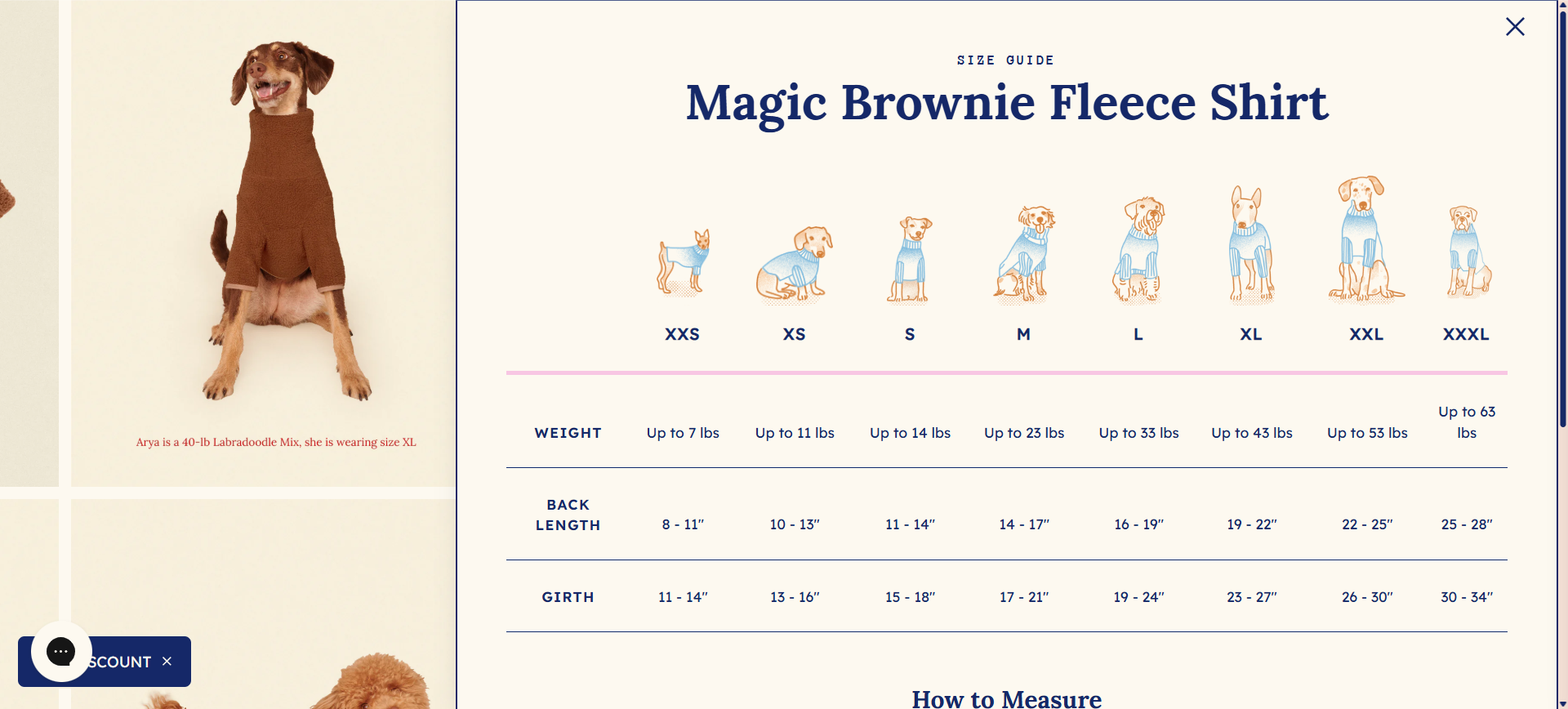
Brand-to-digital translation risk. The founder invested in designing multiple page layouts in Figma upfront. It includes over 15 unique page templates. These cover the homepage, collection pages, account flows, newsletter popups, size guides, and gift cards. Turning that vision into a pixel-perfect Shopify theme from Figma was a challeng. We did it without using a pre-built theme as a shortcut. It took strong Liquid skills and close attention to spacing, typography, and interactions.
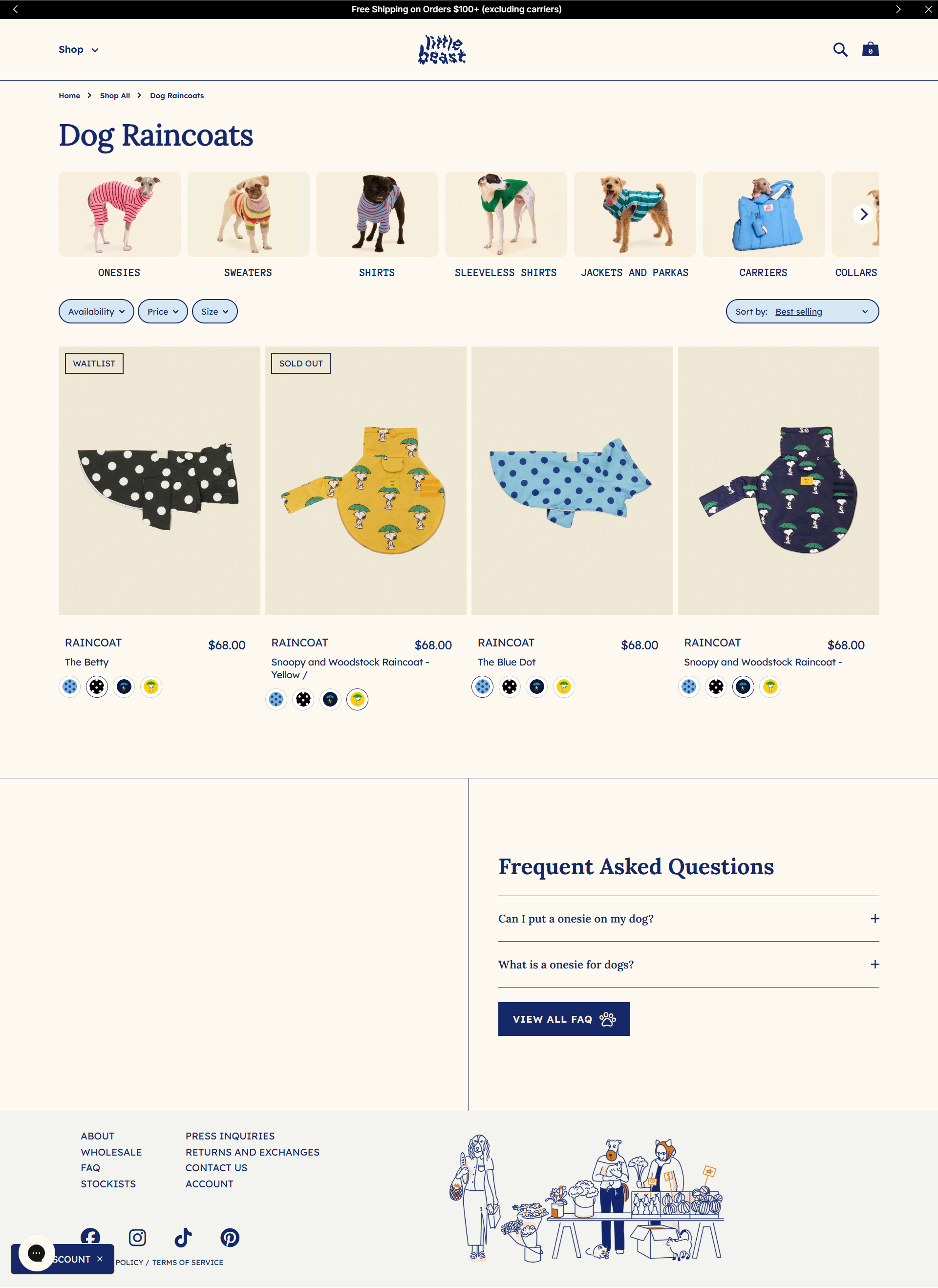
Fashion-grade UX expectations. Dog clothing shoppers behave like fashion shoppers. They shop by looks, compare sizes across breeds, and expect the same polished collection pages as human apparel brands. They want advanced filters, color swatches, product badges, hover images, and quick add to cart. Standard Shopify themes don’t deliver this for the pet apparel vertical.
Continuous evolution pressure. A one-time build wouldn’t serve a brand landing Disney collaborations and running Black Friday campaigns. Little Beast needed a development partner who could ship new PLP features. They also needed a mid-season footer redesign. They wanted pre-order support for upcoming drops. They also needed a smart cart upgrade, without breaking what already worked.
Performance vs. visual richness. Large images and apps often slow down stores. We fixed the speed so the site stays smooth for every shopper.
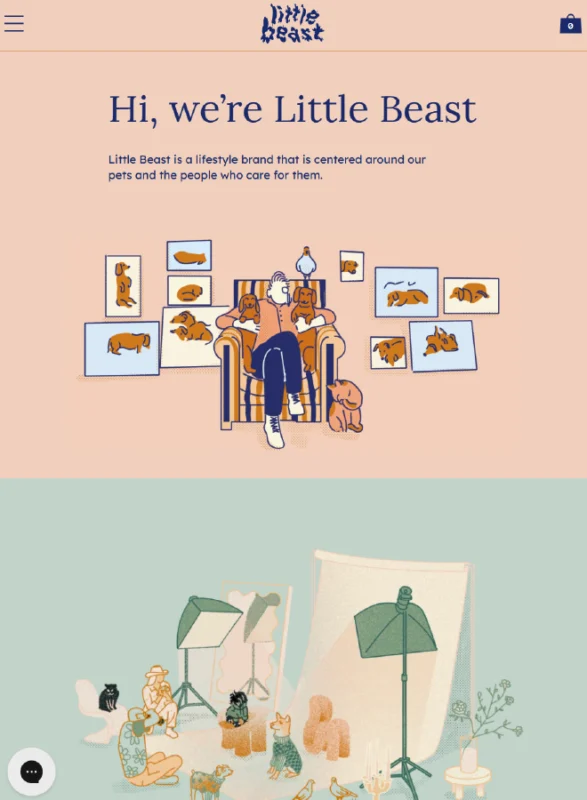
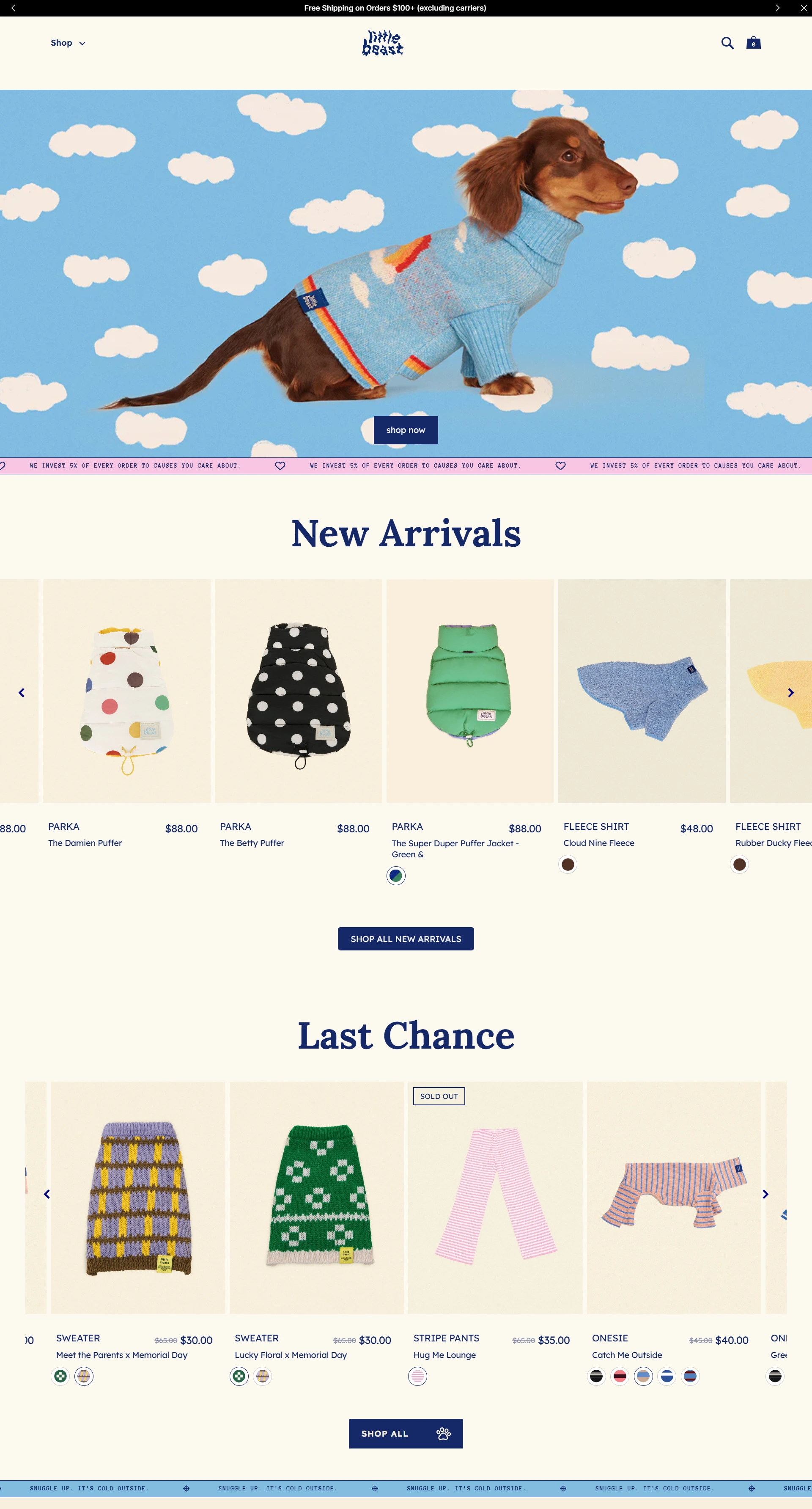
The Little Beast storefront was created from the ground up using Shopify Liquid, without modifying any pre-built themes. Every page, popup, and account flow was custom-coded to match the brand’s warm style. It features cream backgrounds, navy accents, Lora serif headlines, and photo-focused layouts.
The scope of the initial build alone included:
This wasn’t a theme customization project. It was a ground-up digital build for a dog clothing brand. It needed to match the design quality of human fashion labels. It also ran on Shopify’s commerce infrastructure.
With the theme foundation in place, the next four years focused on steady UX improvements. Each update was driven by real shopping behavior on the pet apparel Shopify store. Dog clothing shoppers do more than browse. They compare fits for different breeds. They look for specific materials. They may buy on impulse based on looks. Every feature below was built to serve that behavior.
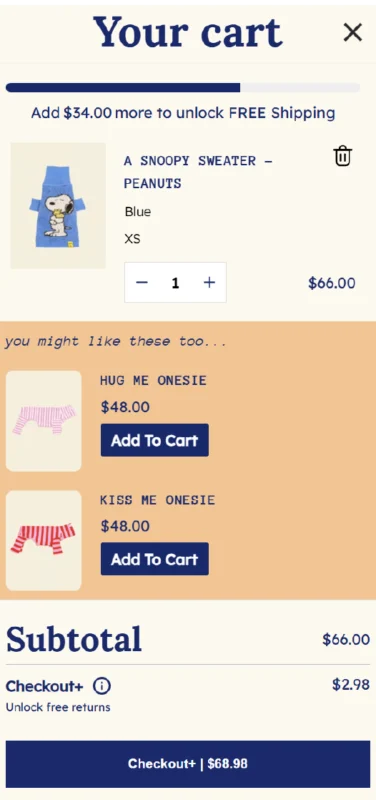
The slide-out cart is where browsing turns into buying. A well-placed upsell can increase average order value. Little Beast’s Rebuy Smart Cart customization on Shopify went through three major iterations. Each iteration strengthened the link between cart UX and revenue.
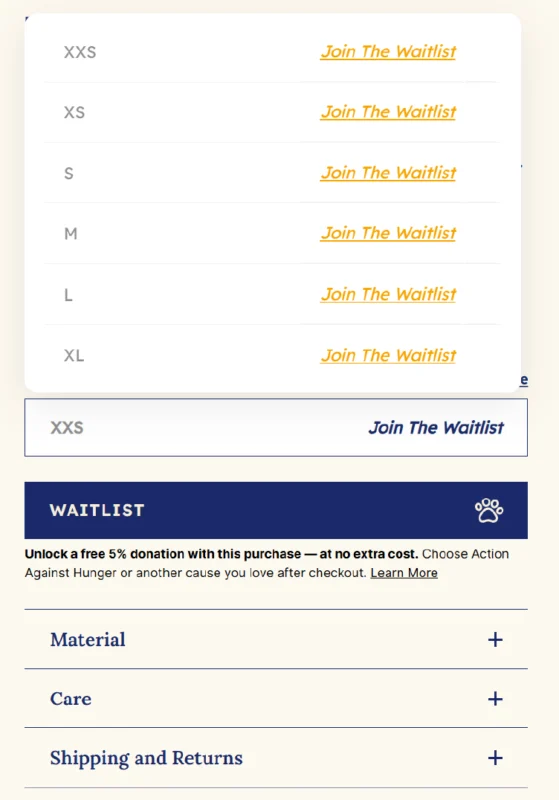
As Little Beast expanded, it needed better content systems to manage complexity. These systems replaced hardcoded templates that needed a developer for each product update. This focus was on creating Shopify metafields for scalable product management and included inventory and merchandising features to maintain store flexibility.
Performance work wasn’t a single sprint – it was an ongoing part of our development. Every new widget, image carousel, or Rebuy component introduced potential load time regressions. The +32% faster storefront performance metric reflects deliberate, ongoing Shopify page speed optimization across the entire engagement.
If your store needs a custom theme, better collection page design, or improved performance for growing features, we can help with your project.
Little Beast’s visual identity uses warm cream colors. It uses Lora serif headlines. It includes playful lifestyle photos. No Shopify theme matches it. Customizing a pre-built theme means you adopt its choices for layout grids, spacing, mobile breakpoints, and interactions. For a pet apparel brand with over 15 page types, those inherited opinions create friction at every step.
A custom Shopify theme from Figma, built from scratch in Liquid, ensures every detail aligns with Little Beast’s brand. In the competitive dog clothing eCommerce market, consistency is key to standing out. This consistency should be evident at every interaction, providing you with a competitive edge. It is essential, not a luxury.
Rebuy Engine excels at smart cart upsells – its recommendation logic and cart integration are purpose-built for that context. But on the product detail page, the calculus shifts.
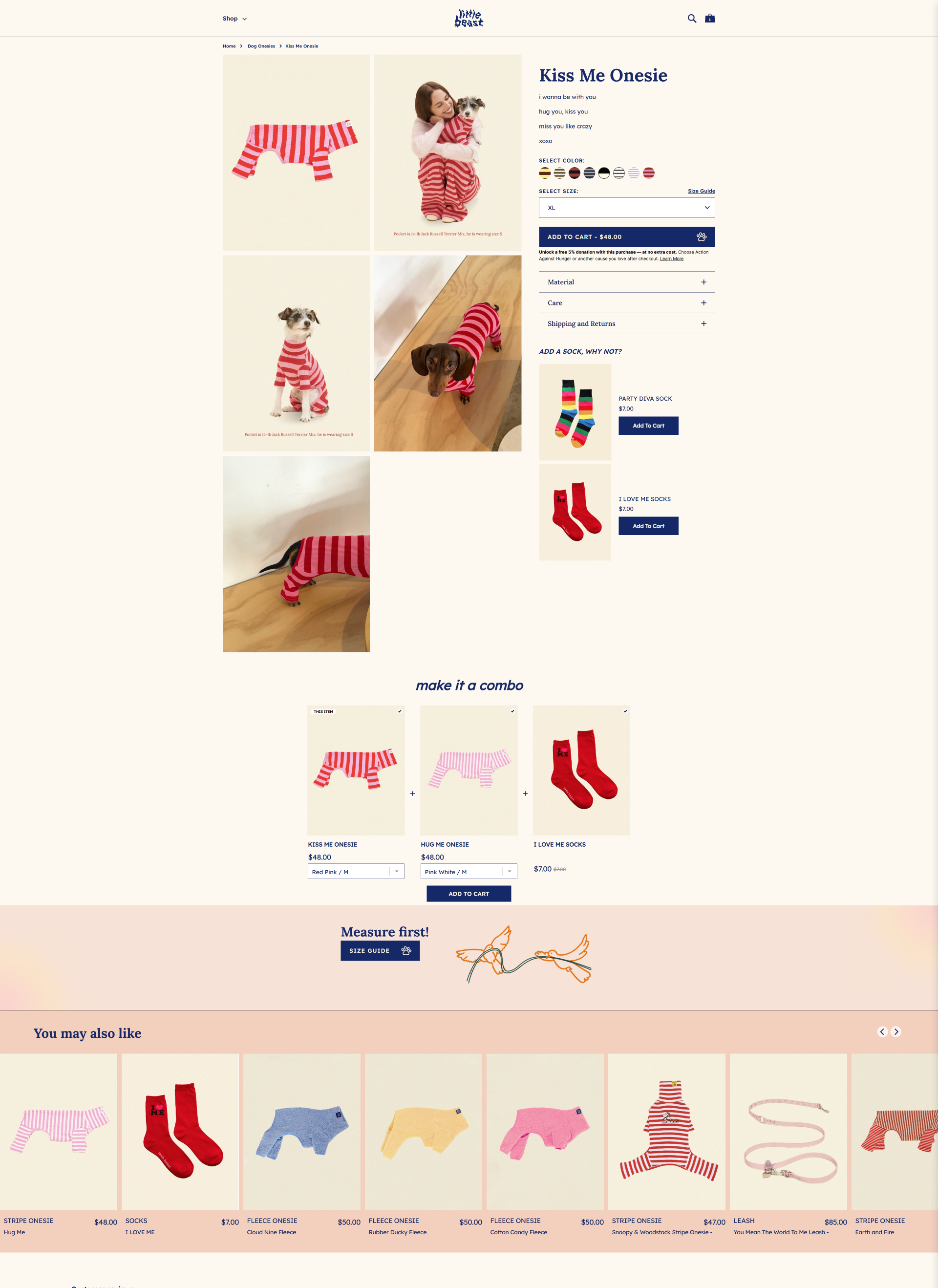
Third-party recommendation widgets load their own JavaScript bundles, inject their own DOM elements, and constrain styling control. For a visual store like Little Beast, product card design is key to browsing. Native Shopify recommendations gave full control of appearance, loading, and placement. The result: Rebuy stays where it’s strongest (the smart cart), and the PDP keeps full design and performance autonomy.
Standard Shopify variant handling creates separate URLs for each color option. Examples include /products/puffer-jacket?variant=blue and /products/puffer-jacket?variant=red. This splits search authority across dozens of thin, near-duplicate pages. For a pet apparel store with 50+ products in multiple colorways, that fragmentation is a real SEO liability.
The Product Combine approach merges all variants into one main product URL. It also shows Shopify color swatches for pet products on collection and product pages. Shoppers see the full color range; search engines see one main page per product. The net effect: stronger rankings per product and a cleaner, more crawlable site architecture.
We appreciate you having taken your valuable time to complete the form. We will get back to you within one business day.